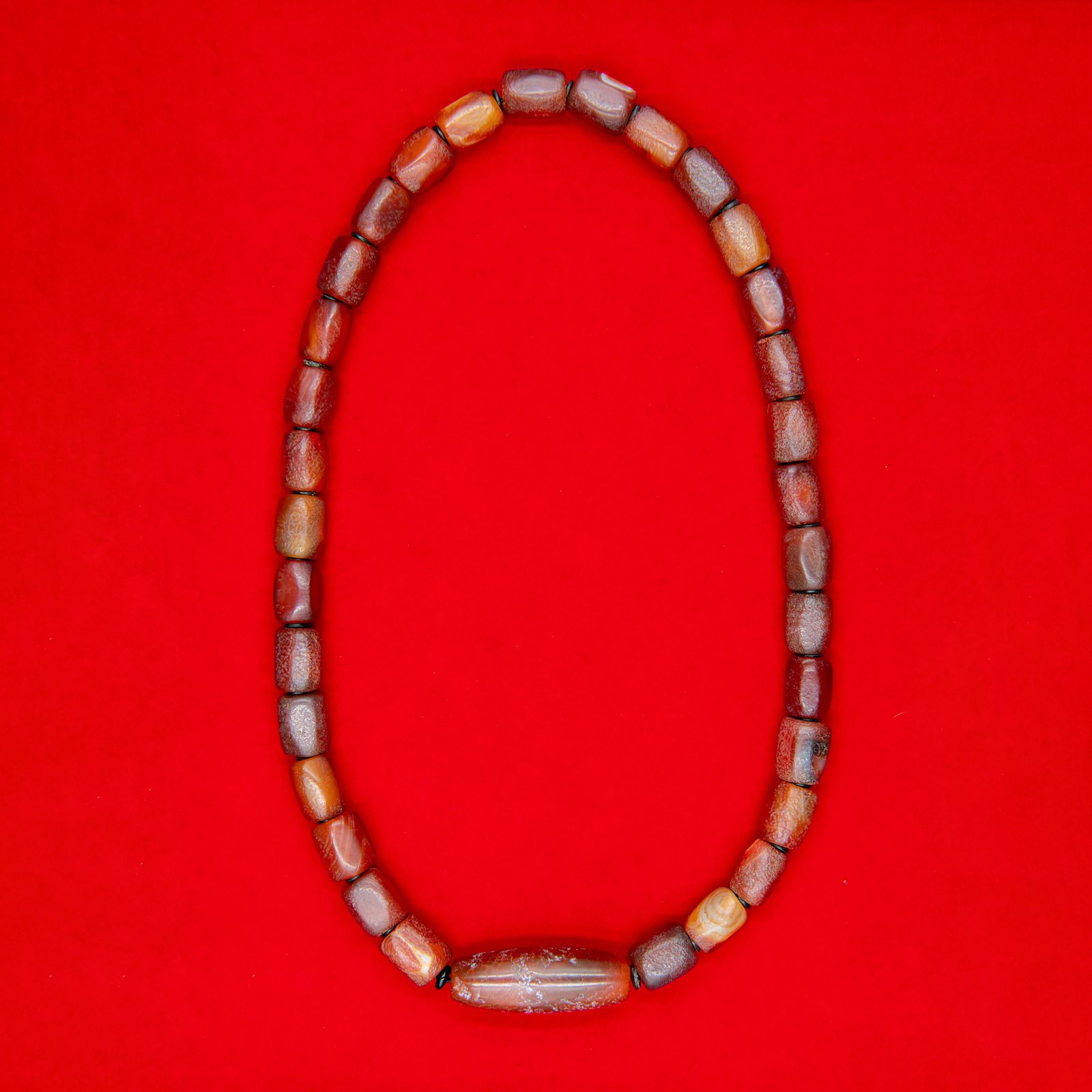
Object: Necklace
Culture/Origin: Tibet
Date: ca. 10th–11th century CE
Materials: Agate, carnelian
Dimensions: [Insert dimensions if available]
Description:
This necklace is composed of graduated agate and carnelian beads in warm shades of red, brown, and ochre, with a central elongated bead serving as the focal point. The use of agate and carnelian in Tibetan jewelry reflects long-standing trade connections across Central Asia, where such semi-precious stones were valued for both their aesthetic qualities and their protective associations. The smooth, weathered surfaces of the beads suggest considerable age and prolonged use, consistent with an object of approximately one thousand years in antiquity.
Significance:
Necklaces of this type held both decorative and ritual functions within Tibetan culture. Agate and carnelian were believed to embody protective and healing properties, making them integral to amuletic jewelry traditions. The survival of this piece provides insight into Tibetan material culture, trade, and spiritual practices during the early second millennium CE.