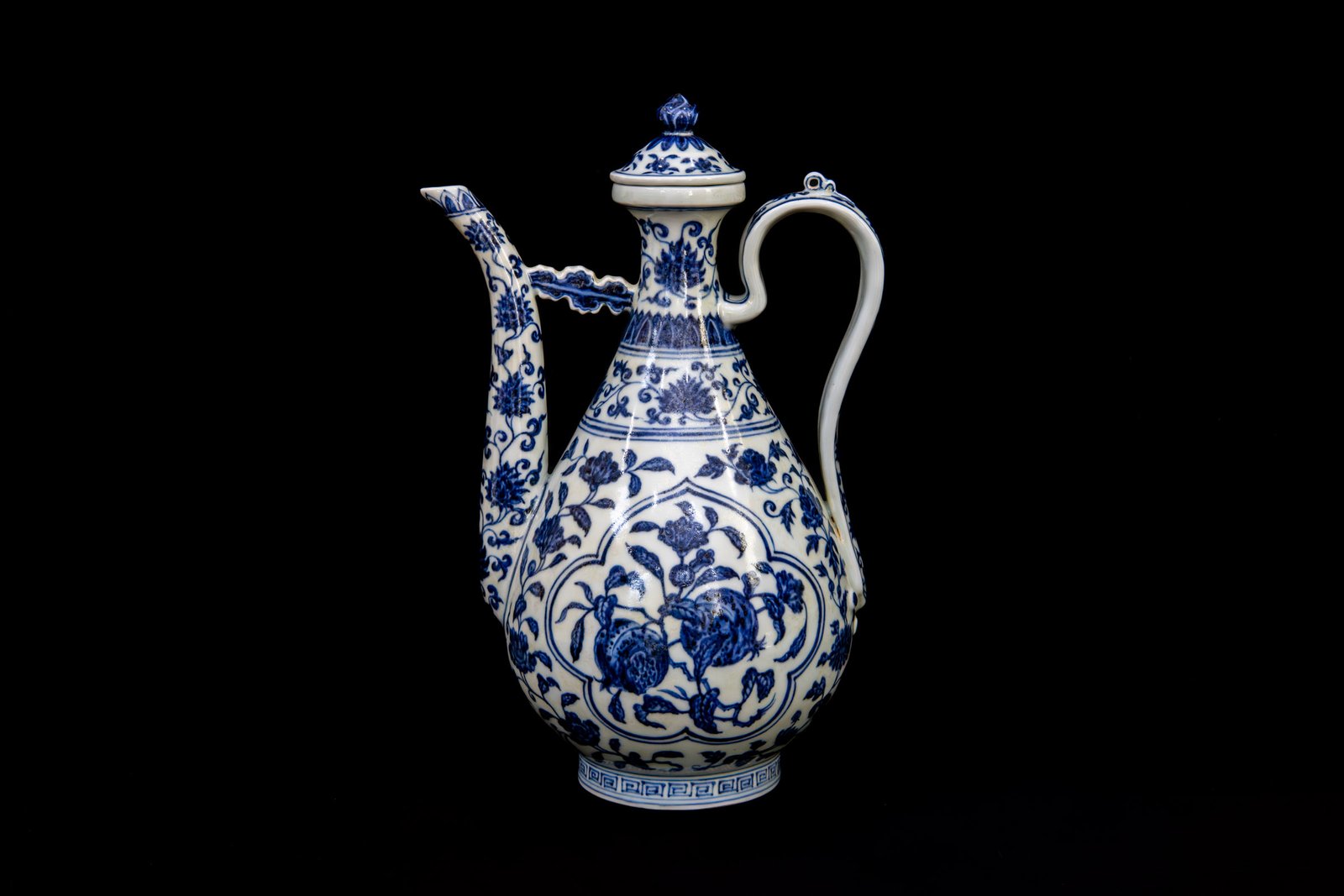
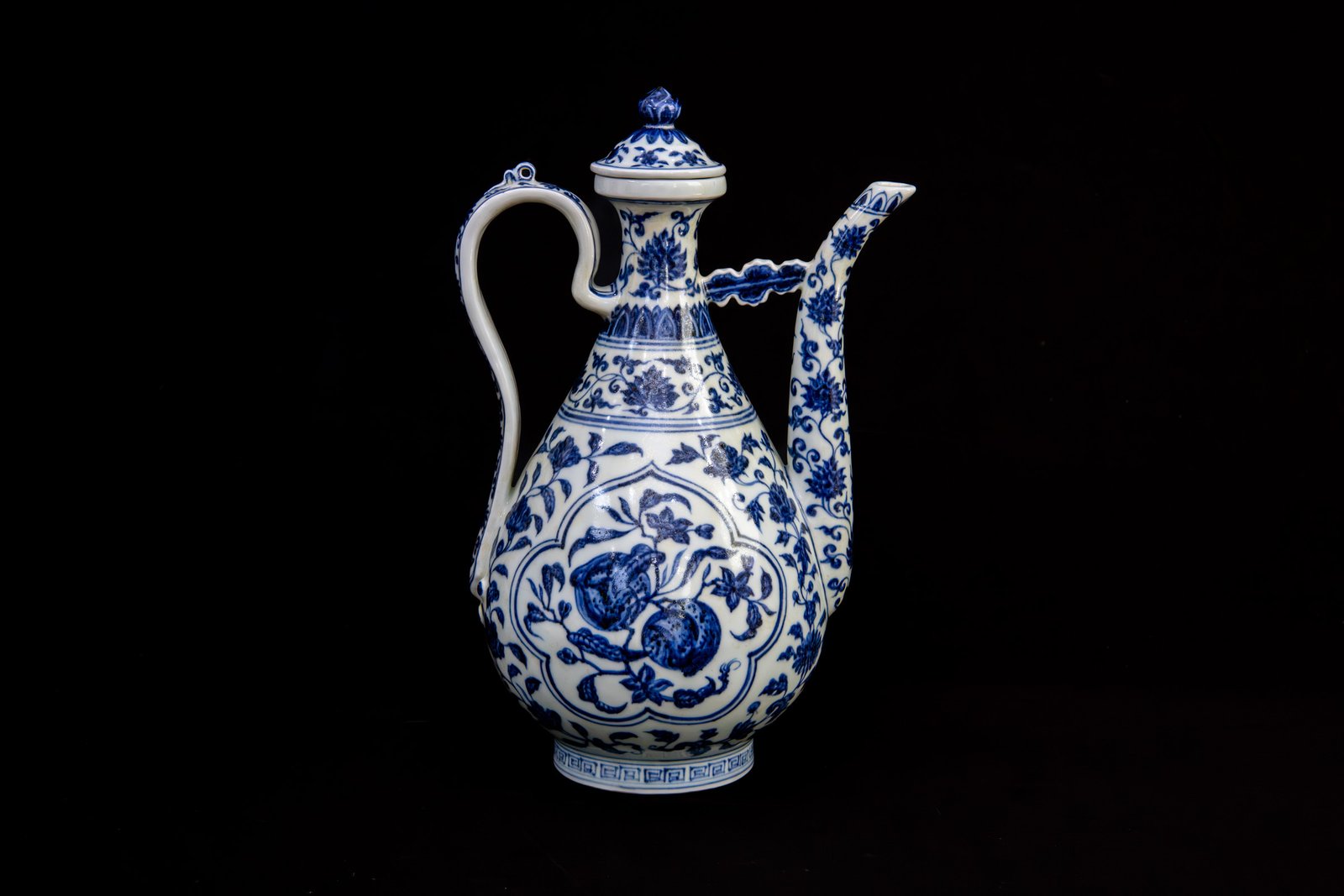
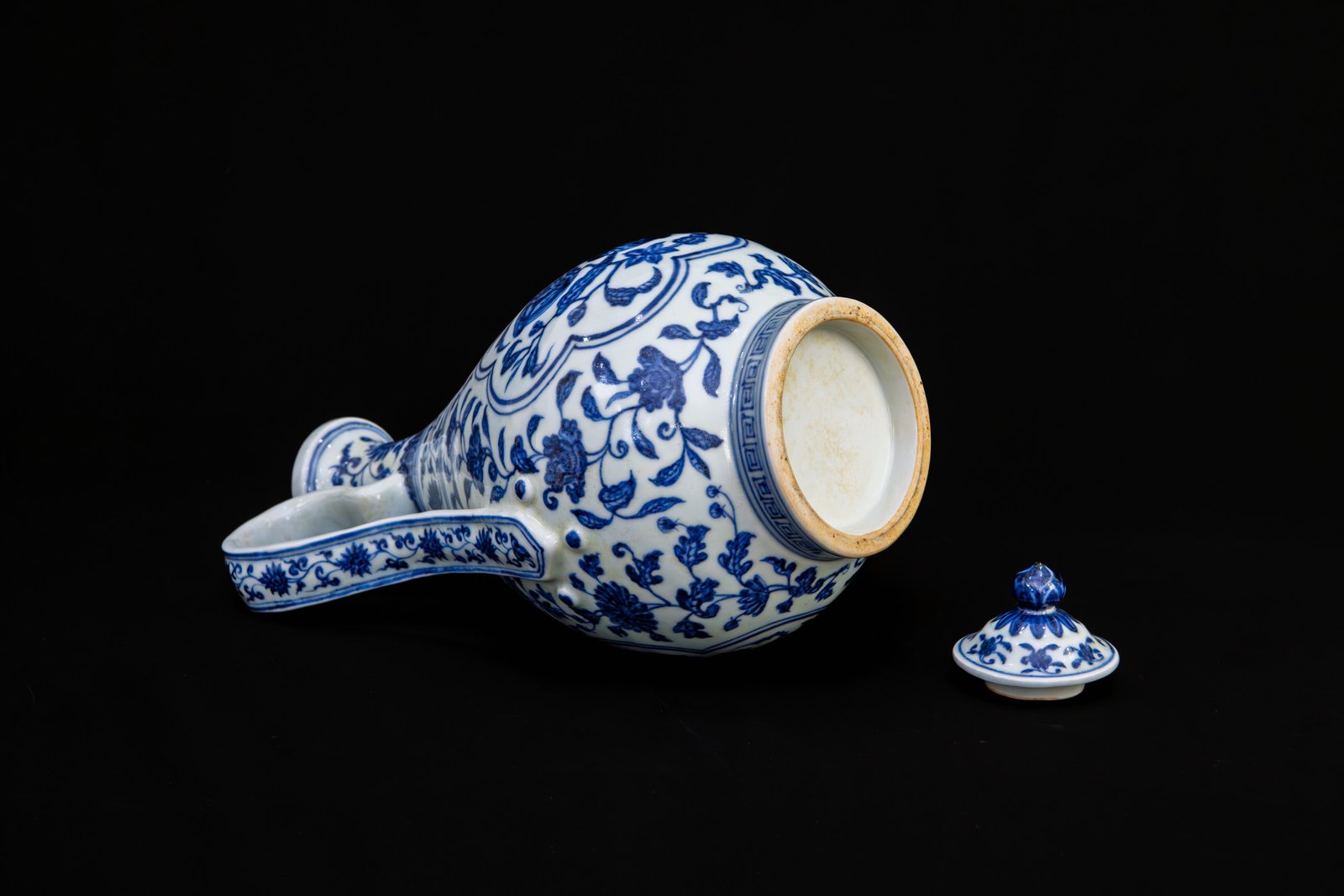
A Ming Yongle blue-and-white ewer and cover with panels of detached floral and fruit sprays would be a porcelain vessel dating to the early 15th century (1403–1424).
Here’s a description in line with how such a piece might be catalogued:
-
Form: Typically pear-shaped body with a long slender neck, curved spout, and loop handle, often with a domed cover. The cover usually has a finial, sometimes bud-shaped.
-
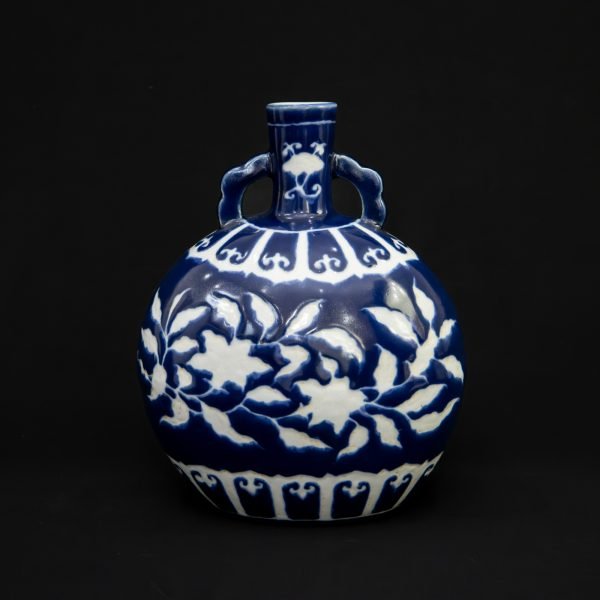
Decoration: Painted in underglaze cobalt blue, arranged in panels separated by decorative borders. Each panel would show a single floral or fruit spray—for example lotus, chrysanthemum, peony, camellia, pomegranate, peach, or grape—floating against the white ground.
-
Style: The sprays are “detached,” meaning they are rendered singly and spaced apart rather than in continuous scrolls. This sparse, elegant arrangement is highly characteristic of the Yongle aesthetic.
-
Historical context: Such ewers were made for both domestic use and foreign trade, including export to the Islamic world, where this form was particularly appreciated.