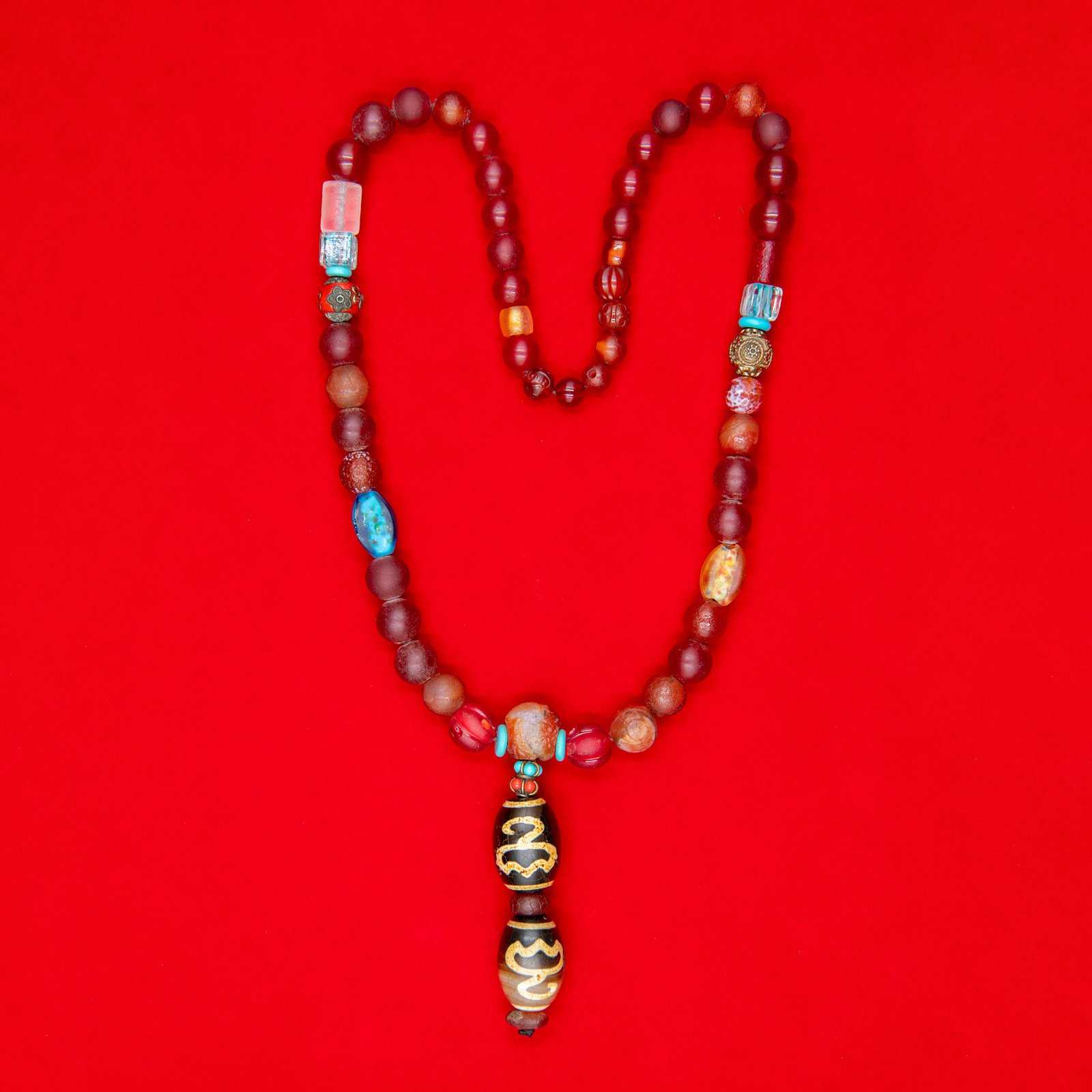
Very Rare Ancient Dzi-Taklok Beads (500 BC – 100 AD, Tibetan Culture)

Very Rare Ancient Dzi-Taklok Beads (500 BC – 100 AD, Tibetan Culture)

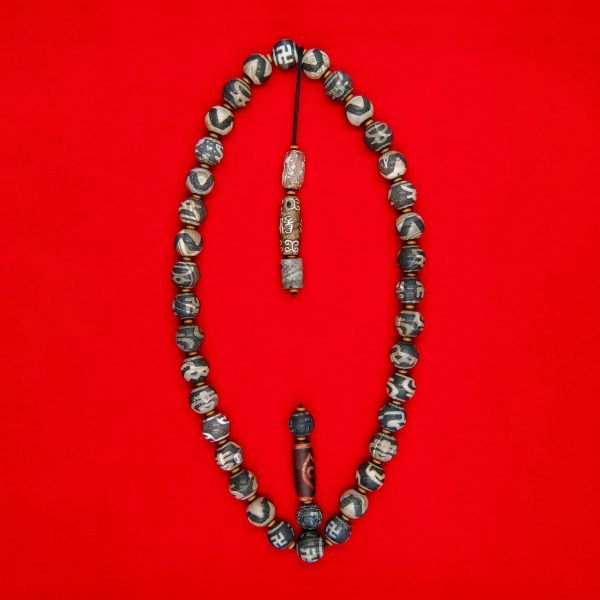
An exceptional strand of authentic Dzi-Taklok beads, dating back over 2,000 years to the early Tibetan cultural sphere.

  • Period: 500 BC – 100 AD

  • Origin: Tibetan culture

  • Material: Agate with crystal-like qualities

  • Colors: Striking yellow and blue with natural multicolored variations

  • Length: 44 cm

  • Weight: 200 g

Pieces of this age and quality are rarely available on the market. Their vibrant colors and strong cultural associations make them highly desirable to collectors of early beads, Tibetan antiquities, and rare ancient ornaments.

SKU: AA1006 Categories: , Tag:
Q

Enquiry

Very Rare Ancient Dzi-Taklok Beads (500 BC – 100 AD, Tibetan Culture)

Very Rare Ancient Dzi-Taklok Beads (500 BC – 100 AD, Tibetan Culture)

An exceptional strand of authentic Dzi-Taklok beads, dating back over 2,000 years to the early Tibetan cultural sphere.

  • Period: 500 BC – 100 AD

  • Origin: Tibetan culture

  • Material: Agate with crystal-like qualities

  • Colors: Striking yellow and blue with natural multicolored variations

  • Length: 44 cm

  • Weight: 200 g

Pieces of this age and quality are rarely available on the market. Their vibrant colors and strong cultural associations make them highly desirable to collectors of early beads, Tibetan antiquities, and rare ancient ornaments.

Thank you for your interest. Please fill out the below form, and our specialist will follow up with you shortly.

Q

Share

Product Description

Object: Strand of Dzi-Taklok Beads
Date: ca. 500 BCE – 100 CE
Culture: Tibetan
Material: Agate, with crystal inclusions
Dimensions: Length 44 cm; Weight 200 g
Colors: Predominantly yellow and blue, with multicolored variations

Description:
This strand of Dzi-Taklok beads represents a rare example of early Tibetan beadwork, dated between the late first millennium BCE and the early first millennium CE. The beads are fashioned from agate, exhibiting crystal-like translucency and a distinctive polychrome palette of yellow, blue, and related hues. Objects of this type are associated with ritual and symbolic functions within Tibetan culture, and their preservation over two millennia underscores both the durability of the material and the cultural value ascribed to such ornaments.